
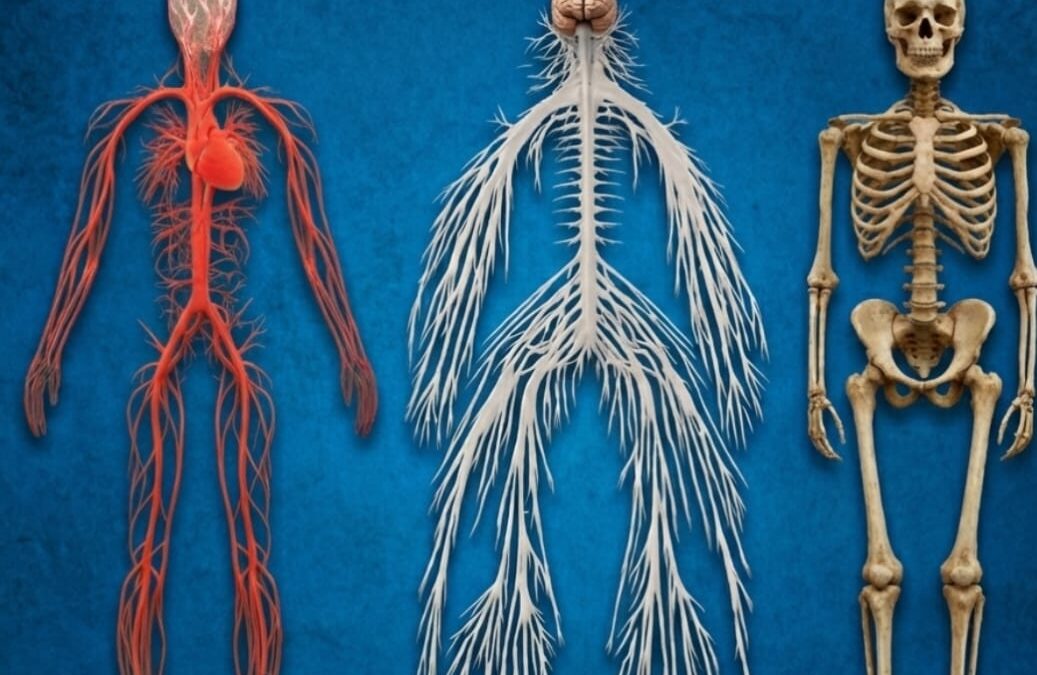
The human body’s nervous system is a marvel of biological engineering.
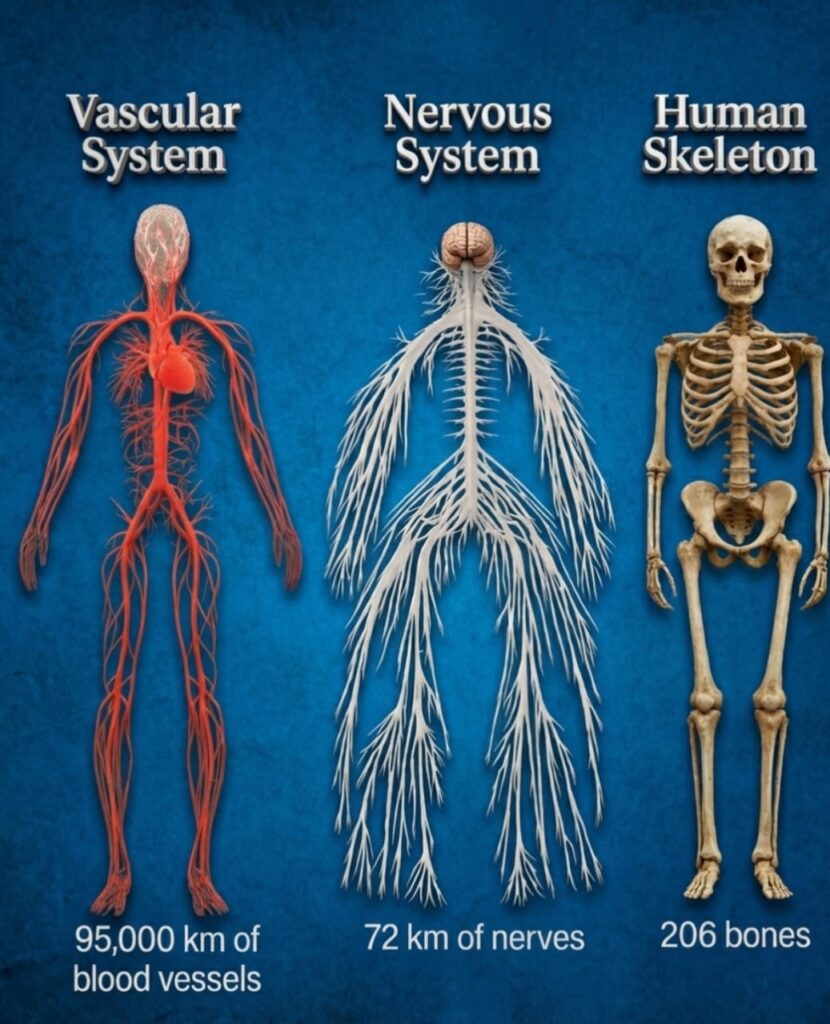
If all your nerve fibers were stretched end to end, they’d span roughly 45 miles (72 kilometers) – enough to connect distant parts of your body with lightning-fast communication.
The longest single nerve, the sciatic nerve, can stretch over 1 meter (3 feet) in some individuals, running from the lower spine down to the foot.
The central nervous system, made up of the brain and spinal cord, controls every thought, sensation, and movement with the spinal cord alone measuring about 18 inches (45 cm) in length.
And that’s just one system.
The body’s blood vessels – arteries, veins, and capillaries stretch more than 95,000 kilometers (59,000 miles) if laid end to end, enough to circle the Earth more than twice.
Supporting it all is your skeleton, built from 206 bones, which protect organs, produce blood cells, and form the framework for muscles. Together, these systems highlight the body’s astonishing complexity and its ability to function as one synchronized unit.
Source: Hill, M. A. (2023). The Nervous System. Anatomy & Physiology, University of Leeds; National Institutes of Health (NIH); American Heart Association. less